Sunday, July 24, 2011

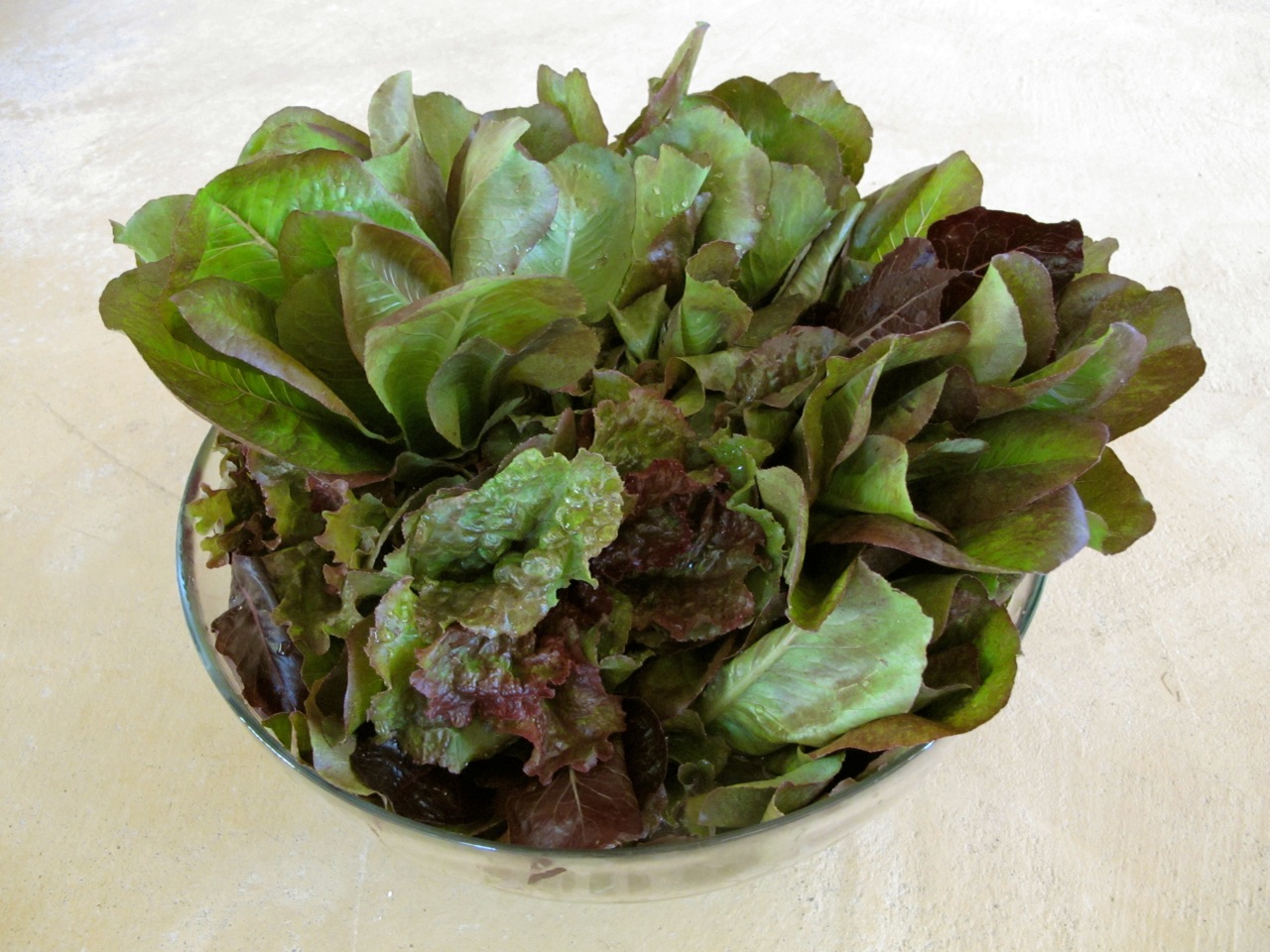
Lettuce in July


Lettuce is a cool weather vegetable better suited to spring and fall than the blasting African heat of Tuscan summers. But I planted several varieties in the partial shade of the prune and fig trees lining our orto (kitchen garden) and we are still eating them. Like most things fresh from a garden, this lettuce is particularly sweet and "lettucy" tasting, not a hint of bitterness. Because enzymes start turning sugars and soft tissue to starch and cellulose the minute you pick ANYTHING, you can't get anything like this in ANY grocery store or market.

Coming soon: Corn, beets, tomatoes, melons...


Monday, July 11, 2011

A Farmer's Worst Nightmare


It's the leading cause of farm fatalities and it makes farming one of the three most dangerous occupations in the United States. It usually happens when your load shifts, or you misjudge the angle of a hillside or the stability of ground after rain. Sometimes the tractor just gets out of control. Sometimes it hits something it shouldn't. Worst of all is when it rolls over on you.


I was tilling the steeper part of the vineyard, on the slope Sally dubbed Stairmaster because of the burn we get in our butts when we ascend it, when I hit a root and the Bertolini flipped over, throwing me over the handlebars and smashing me into a row of grapevines. While it's true the Bertolini walking tractor has only two iron wheels, it qualifies as moderately heavy machinery nonetheless, especially when it lands on you. This picture hardly does the bruise justice, but what looks like the scar left from an angel wing removal, is the imprint of the handlebar that slammed me down.

Stupid, stupid, stupid is how I feel about the accident. And stupid is how I felt as I called out for help, hoping the kid running the whining diciespulietore (weed whacker) in the distance would eventually turn it off and hear me hollering. When he finally did, he came running to find me snarled in a vine trellis and unable to get the beast off my back. It took all his strength to get it off me, and both of ours to turn it upright. The good news is I made a nice cushion for the tractor, so it was undamaged. I was lucky, I escaped with only a bruised torso. I shudder to think what would have happened if I'd caught a hand or foot in the tiller blades.

An honest admission: It was a very hot afternoon, and heat hampers Jack's ability to think clearly, making him rash and accident prone. Tuscan Resolution #3: Make no serious decisions of any kind in the heat, especially when it comes to heavy equipment.

This afternoon it is 100 degrees in Tuscany. I am driving nothing more than my laptop in front of a fan.

Monday, July 4, 2011

Frivolous Vintages


Today Sally and I are celebrating more than independence with the first ready wine of our bottled 2010 vintage. The rosato (rose`) which I've named Frivolo (Frivolous), because it was an afterthought, was meant to be a carefree and easy drinking summer thirst-quencher, but turned out better than I expected by a lot. It is fruity, lots of cherry and raspberry on the tongue and roses and violets on the nose. And not one hint of the dreaded oidio (powdery mildew)!!!! It is more complex than most rose's I've tasted, yet is refreshing and best served chilled like others in the genre. I'm thinking Tavel.


After we harvested the perfectly ripe grapes for the main crush, there were slightly less ripe clusters I didn't want to waste, so we made a second harvest to ferment a less alcoholic wine that I was thinking of bottling as a sparkling wine. Left on the skins for only 1 day, this wine should have been pinker, less red, but a few bunches of colorato (used only to add deeper color) got into the batch, hence an almost burgundian density that is quite pretty in the glass.

The sad part of the story is that most of the wine escaped down the drain when I bumped the 14 gallon demijohn it was fermenting in. The happy part is that a hunch paid off.

I did lay down 3 bottles with champagne corks and a tiny addition of sugar that will restart the fermentation and carbonate the wine naturally. If it works, you can bet I'll be making more pink Tuscan "bubbly" next year.

Happy Birthday America! I'm looking at you through rose' colored glasses!

Monday, June 20, 2011

Fool Moon: Or Flock Amok


It was my first relaxing day off the farm since arriving in April. Sally and I had spent the whole afternoon in sybaritic splendor with publicist Sally Fischer, her husband Eliot and son Jack, eating, drinking, swimming, chatting at Il Falconiere, just below the ancient Etruscan city of Cortona. Then it was off to Il Molino for dinner. We were dipping our biscotti in vin santo when the kitchen staff rushed through the restaurant saying “something is strange with the moon.” Outside, we stood together in front of the old mill invoking Galileo and gazing up at an unexpected treat -- a total eclipse of the moon. As the first sliver of smoky moon began to re-silver, we bid our buona notes and Sally and I drove back to Tana Lepre to view the end of the eclipse from our balcony.
We never made it to the balcony.
At the stroke of midnight the celestial event was just ending as we drove up to find a note from the caretakers at Romitorio -- the villa perched at the top of our dell and our only other visible neighbor -- taped to our front door. “Something is wrong,” it said. “Your sheep have escaped. Now they are in our garden. Please come get them as soon as you can!”
Romitorio has recently become the property of Virgine Saverys, who runs Avignonesi, one of the biggest wine labels in Italy and the world. We hadn’t met yet, but I could just imagine the damage the munching sheep might be doing to her shrubbery, and the scene when we finally do met: “Oh! So you’re the one with the sheep!”
It is one thing to keep sheep penned inside an electric fence that tickles their noses when they touch it. It’s quite another to herd them. Especially when you’ve never herded anything before. Especially at night. Especially when your darned flashlight won’t work. Especially when you have no idea how to get a flock of anything to turn right or left, or to stop.
When we moved them from the lower field to the olive grove in broad daylight, Ulisse’s Albanese sheep wrangler, Simi, used a bucket full of grain to entice them along. I had no grain. But I did have two boxes of Fitness, a multigrain breakfast flake, in the pantry. As I drove the kilometer up to Romitorio, Sally dumped the Fitness into a bucket.
We found the sheep milling around by the villa’s front gate. Natalie, the caretaker, said they’d been walking down the white road. She was very sweet about it all. I wanted to kiss her for not letting them run all the way to Siena. But I had miles to go before I slept, so we moved ‘em up and headed 'em out.
With Sally driving the car as “pusher” and illuminating the way with the headlights, I walked the sheep down the road trying to interest them in the Fitness, which they couldn’t have cared less about. They were nervous as hell in the moonlight and suddenly they took off running. Thankfully, they follow roads like, well, sheep, which made chasing them somewhat easier than it could have been if they’d just decided to cut across the fields. Eventually outrunning them, I threw out my arms and blocked them. They turned back, started running, and when they got to Sally’s blockade at the junction, turned down our little country lane.
There were several more junctions to turn in this manner – them taking off, me outrunning them, me throwing out my arms and shimmying ugga-booga, them turning like scared sheep, them running up to the headlights like scared sheep, Sally opening the car door and shimmying ugga-booga, and them turning in the direction we wanted. One more turn to go.
This time they simply overshot the turn and charged up the steep hill of alfalfa behind our farm. I charged off after them, Sally’s fading voice became a squeak in the moonlight: “Where are you? Where’d you go?” “Go home!” I yelled. There was nothing more she could do.
After stumbling through deeply furrowed ground pocked with a mine field of calf-deep wild boar rooting holes, I found the flock halfway up the massive slope. Thank goodness the moon was full, the sky cloudless, and some of the sheep white. Thank goodness I didn’t bust an ankle. And now, I began to learn a fundamental law to the art of herding of sheep. You do not herd a flock of individuals., you influence a blob, a big wooly amoeba that oozes this way and that. The trick is to anticipate the direction it is about to ooze in, then try to steer the portion showing directional intent with your firm presence.
By about 2:00 a.m., after munching crop circles through Giovanni’s alfalfa, I half expected the flock to lie down and start chewing cud, and I’d resolved that I’d just sit down and spend the night wherever they stopped, just like a real pastore. But I’d gotten the hang of keeping the blob moving and finally managed to get them into our olive grove at the top of the hill.
I called out to Sally and she heard me. Probably half of Tuscany heard me. When she came up the hill carrying a hurricane lantern burning a candle, she looked like the French Lieutenant’s Woman, except that the lantern was from IKEA. The sheep and I were tired but we were closer than I’d actually hoped to be. But when I unhooked part of the fence to usher them through, they hugged the shade of an olive tree to stay out of the bright moonlight, and refused to budge. This is where thinking like a sheep came in handy.
The thing is: besides the plants they ceaselessly seek, sheep relate first and foremost to the butts of other sheep. If they see a wooly haunch receding, they all move almost automatically to close the distance. I'm sure there is even a mathematical formula for this: The anxiety of a sheep increasing in direct proportion to the distance between its nose and the rump of the next sheep. All I had to do to take advantage of this natural law, was grab the fleecy head of one of the biggest sheep, and walk it toward our destination. When the others saw its rump receding they followed, and with Sally flapping her arms at stragglers, I pulled the flock the last leg home.
After repairing the part of the fence mysteriously wide open (did someone do this as a joke?), and switching the electric fence back on, we went down to the house and drew a bath. Then, for the first time ever, I shuttered the bedroom windows against the bright light of the fool moon. Even then it was hard to sleep. Because I’d neglected to do a head count, I counted sheep over and over in my dreams, wondering if I’d gotten them all back, if little lambs really do eat ivy, and just what their lives would be like now that these lambs had tasted freedom.
Friday, June 10, 2011

Living Lawn Mowers

The loaner lambs from Podere Il Casale arrived last week. Fourteen, 6-month-old walking fertilizer factories. In one week they cleared the small field, now more a meadow, just below the house. Now they are up in the olive grove munching away and removing the fire hazard. I won’t have to pay to have the ground mowed or tilled this year, and this pleases me.

Unlike the claims of Hollywood western cowboys, sheep don’t eat everything down to nubs. They are very selective. And they aren’t noisy. OK, yeah, they’re a little stinky when they get wet in the rain, but that’s OK way out in the field.

Tuesday, May 31, 2011

Wild Starts

Two posts ago, I said I like yeast and I meant it. Three months ago, I visited my good friends Eric Fischl and April Gornik at their Long Island home. Eric, ordinarily a renowned painter and founding curator of the American Now & Here show (which opened in Kansas City last month and will now travel around the US), had gotten into baking bread using wild homemade sourdough starter. The kind that has been used forever, by Romans, Frenchmen, and western pioneers, but has been replace in the last century by industrial yeast powder (the way real soup stock got replaced by boullion cubes). It’s also the gooey basis for bread therapy.

I must say the olive loaf Eric shared was divine. It was based on the recipe from the Tartine Bread Book, written by Chad Robertson of the famous bay area bakery/cafe, where Eric and April had eaten a meal and become inspired. As a belated Christmas gift, they gave me a copy.

A few weeks later, Sally and I were visiting our friends Michael Pollan and Judith Belzer at their Berkley, California home. Michael was baking bread to research a chapter on fermented foods for his next book-n-progress. It happened to be sourdough. It happened to be reminiscent of the Tartine inspired loaves Eric pulled from his oven. When I mentioned the book I’d just been given, he pulled a flour-coated copy from the counter and said that’s what he’d been using (with a little mentoring from the author himself.) That night we tasted a loaf of actual Tartine bread beside a fresh loaf of Michael’s. Sorry Tartine, I liked Michael’s a tad better (more sour, like what I grew up with).

I made my first sourdough bread, from starter, when I was 14 and growing up in Folsom, California. But I gave up fermenting wheat when I began fermenting grapes into wine and concocting savory main courses to go with the result. There’s only so much time in the world. And I could get all the fresh San Francisco sourdough I wanted at the time.

But this is a blog about Tuscany, where there is nothing bland except one thing: its bread. It is, the blandest bread in the world, leavened or un-. No salt. Certainly no wild sourdough starter. Even the air holes have more flavor than the dough. It’s virtue, and its claim to fame, is that it is the perfect neutral base (think wallpaper paste) for respectfully and unintrusively soaking up sauces. One thing it decidedly is not is sandwich bread.

I like sandwiches. A lot.

So, pulling my Christmas gift Tartine book from my bag when I got back to Tana Lepre a month ago, I started a batch of starter [pictured above]. It is something like I made in my California youth, but with good wild Tuscan yeasts and bacteria doing their job on the fine, but bland, Italian flour. For 3 weeks I “trained” my starter, teaching it to rise and deflate on schedule with its daily feeding of new flour. Then I went to work.

There is nothing like a travertine dining table as a workbench for shaping loaves.

Here is the result. Thumpin’ good crust, yeasty perfume, chewy texture. Now I’m going to go make that sandwich!

[all loafs by Jack]

Tuesday, May 10, 2011

The Beast

It kicks, bites, pulls, plows, balks, and handles like a mule. It takes all my upper body strength to start with a pull rope, but once that diesel is thumping, it can till all day without pause. It’s cantankerous on rough ground, a bear to turn corners, and can rip your arms off if you don’t pay attention. It’s the Italian invention that helped put Italian agriculture back on its feet after WWII. It’s the Bertolini walking tractor. I’ve always wanted one!

Actually, Ulisse loaned me his to prepare my garden soil, which I’m giving him half to use. This is our barter system. I give the land, water, attention to the crops, he plants what he wants on his half and harvests it when its ready. In return Sally and I get a melon and a tomato or two and the satisfaction of knowing our once defunct farm is producing even more in this world of dwindling resoursces and rampant population growth. It also just makes the place look tidier.

Before I tilled, I had to mow the tall grass with my trusty scythe. Here is what it looked like. before.